
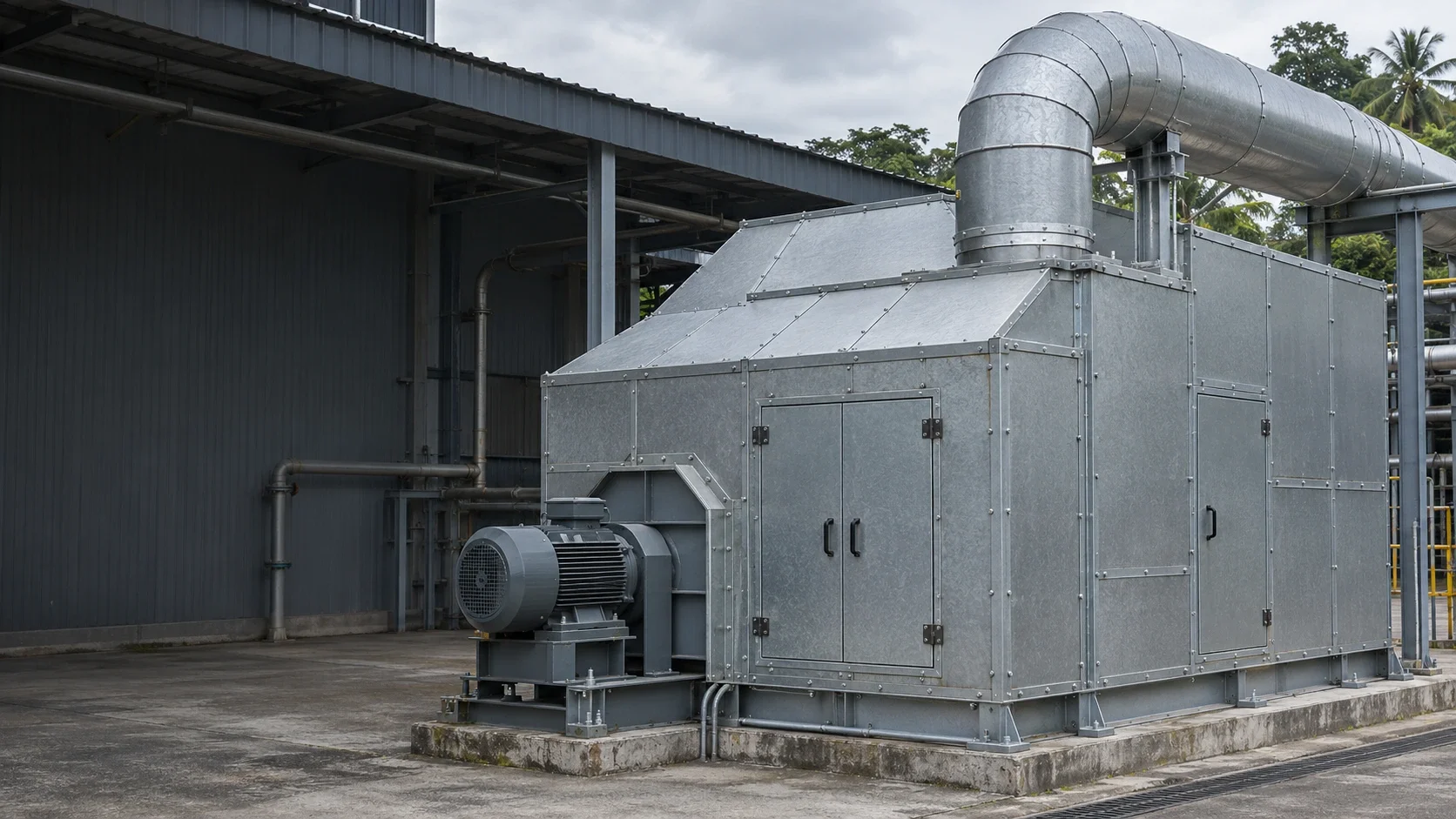
Acoustic Cladding
Acoustic cladding treats equipment surfaces or structures that radiate unwanted sound. Phoenix Noise Control assesses the radiating surface, operating temperature and access requirements to determine whether a cladding approach is suitable or whether a surrounding acoustic enclosure is more appropriate. Phoenix Noise Control is part of KSM Group in Subang Jaya, Selangor, Malaysia.
Acoustic Cladding Applications
Cladding may be considered for machinery casings, industrial equipment and large structures where sound radiates through surfaces. It is not a substitute for treating an open discharge or an unattenuated air path.
Acoustic Cladding Operating Principles
A cladding arrangement can combine a sound-insulating outer layer with absorptive or separating layers, depending on the design. Mechanical attachment and discontinuities influence the installed result.
Cladding can suit selected radiating surfaces when a separate surrounding room would obstruct access or take unnecessary space. It still needs coordinated joints, penetrations and supports. The equipment must remain accessible for inspection, and the treatment must not interfere with its operating requirements.
Acoustic Cladding Fabrication & Access
Fabrication interfaces must follow the equipment geometry and supporting structure. Phoenix Noise Control works with VTR on the agreed arrangement, including removable sections and attachment details.
Acoustic Cladding: Information We Need for a Quotation
- Noise source and required acoustic target
- Equipment dimensions and available space
- Structural supports and interfaces
- Environmental exposure and material requirements
- Inspection and maintenance access
Acoustic Cladding Related Resources
-
Projects
Browse noise control project references.
Explore Projects -
Acoustic Test Lab
Explore acoustic testing capability.
Explore Acoustic Test Lab -
Acoustic Enclosures
Compare acoustic enclosures with surface treatment.
Explore Acoustic Enclosures
Acoustic Cladding FAQs
How is cladding different from an enclosure?
Cladding follows selected surfaces, whereas an enclosure creates a surrounding boundary with access and ventilation. The noise path and maintenance requirements determine which approach is suitable.
Can cladding also provide thermal insulation?
Thermal and acoustic functions require coordinated material selection. Do not assume an acoustic construction meets a temperature or thermal-insulation requirement without checking the specification.
Can removable cladding maintain performance?
Removable sections can be incorporated when joints and attachments are designed for that purpose. They need to be refitted correctly after access.
Request a Quotation for Acoustic Cladding in Malaysia
Send your acoustic cladding requirements to Phoenix Noise Control to discuss the operating duty, installation and acoustic objective.