
Duct Attenuators
Duct attenuators control sound travelling along rectangular ventilation passages. Phoenix Noise Control coordinates splitter geometry, free airflow area and casing interfaces to address the required attenuation without overlooking the fan system’s available pressure allowance. Phoenix Noise Control is part of KSM Group in Subang Jaya, Selangor, Malaysia.
Duct Attenuators Applications
Rectangular attenuators can be used near air-handling equipment, within plant ventilation ducts and along supply or return paths. The source may be a fan or sound travelling from an adjacent space. Identify the direction and path of the unwanted sound before selecting the attenuator location in the duct run.
Duct Attenuators Operating Principles
Sound encounters absorptive splitter surfaces as it travels through the air passages. Splitter thickness, spacing and length influence the frequency response and airflow resistance. Upstream turbulence and high passage velocity can introduce additional noise, so the duct arrangement around the attenuator forms part of the selection.
Duct Attenuators Fabrication & Access
The existing range includes galvanised mild-steel casings with protected acoustic splitter assemblies. VTR fabrication coordinates case stiffening, joints and connection details with the agreed ductwork requirements. Where the airstream needs alternative materials or media protection, identify those conditions before using a standard ventilation construction.
Check the support arrangement and handling route for large sections. Adjacent ductwork should not obstruct inspection or load the casing in an unintended way. During operation, maintain the air passages and investigate changes in system resistance. A later increase in fan duty may require reassessment of both pressure loss and acoustic performance.
Duct Attenuators: Information We Need for a Quotation
For selection, supply the octave-band noise levels, required noise criterion, design airflow, duct opening, permissible pressure drop and available installation space. Placement near the sound source can reduce downstream noise, but fan turbulence, duct vibration and flanking transmission should be assessed as part of the full system.
Duct Attenuators — Equipment Gallery
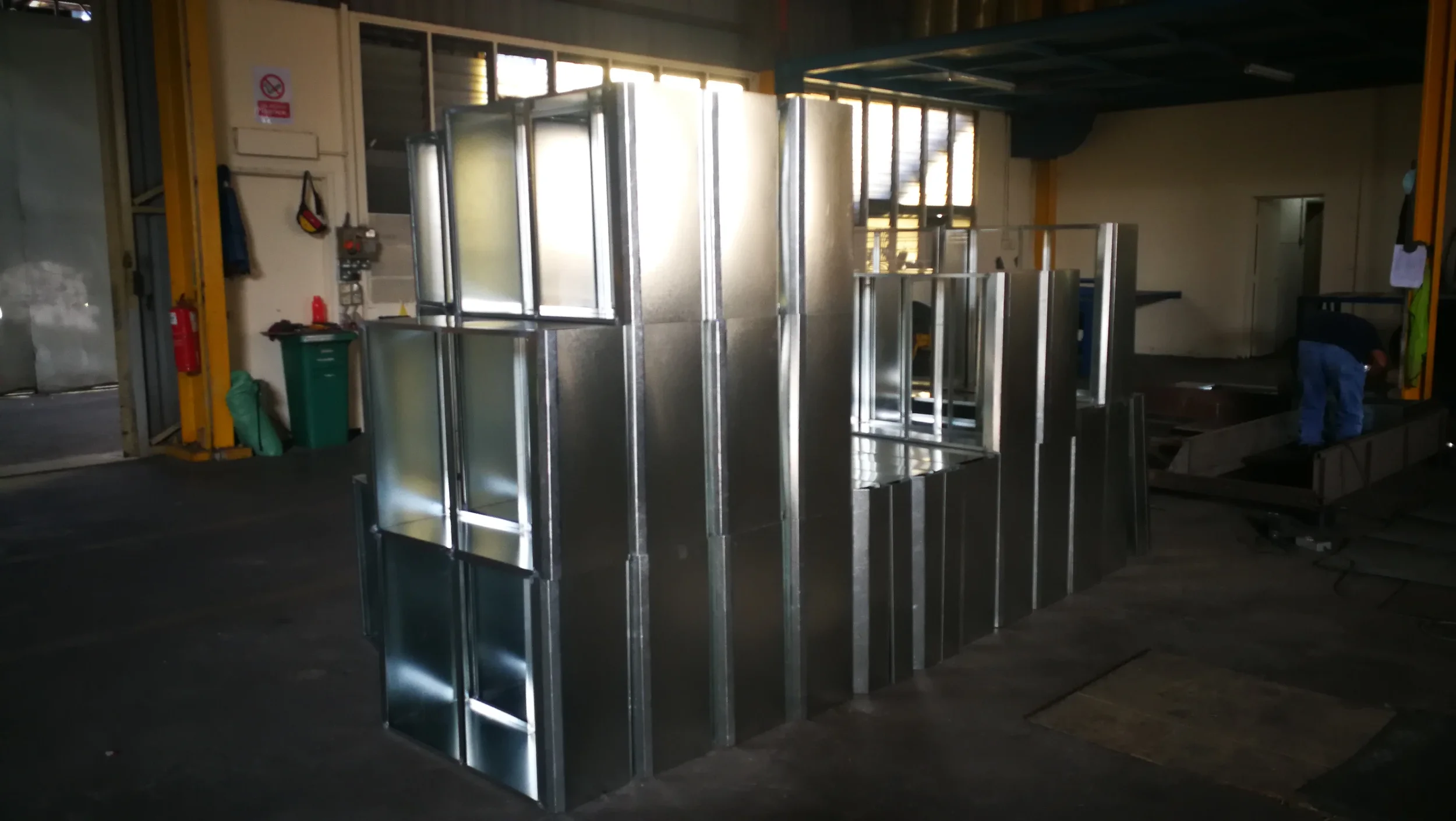
Duct silencer splitter construction
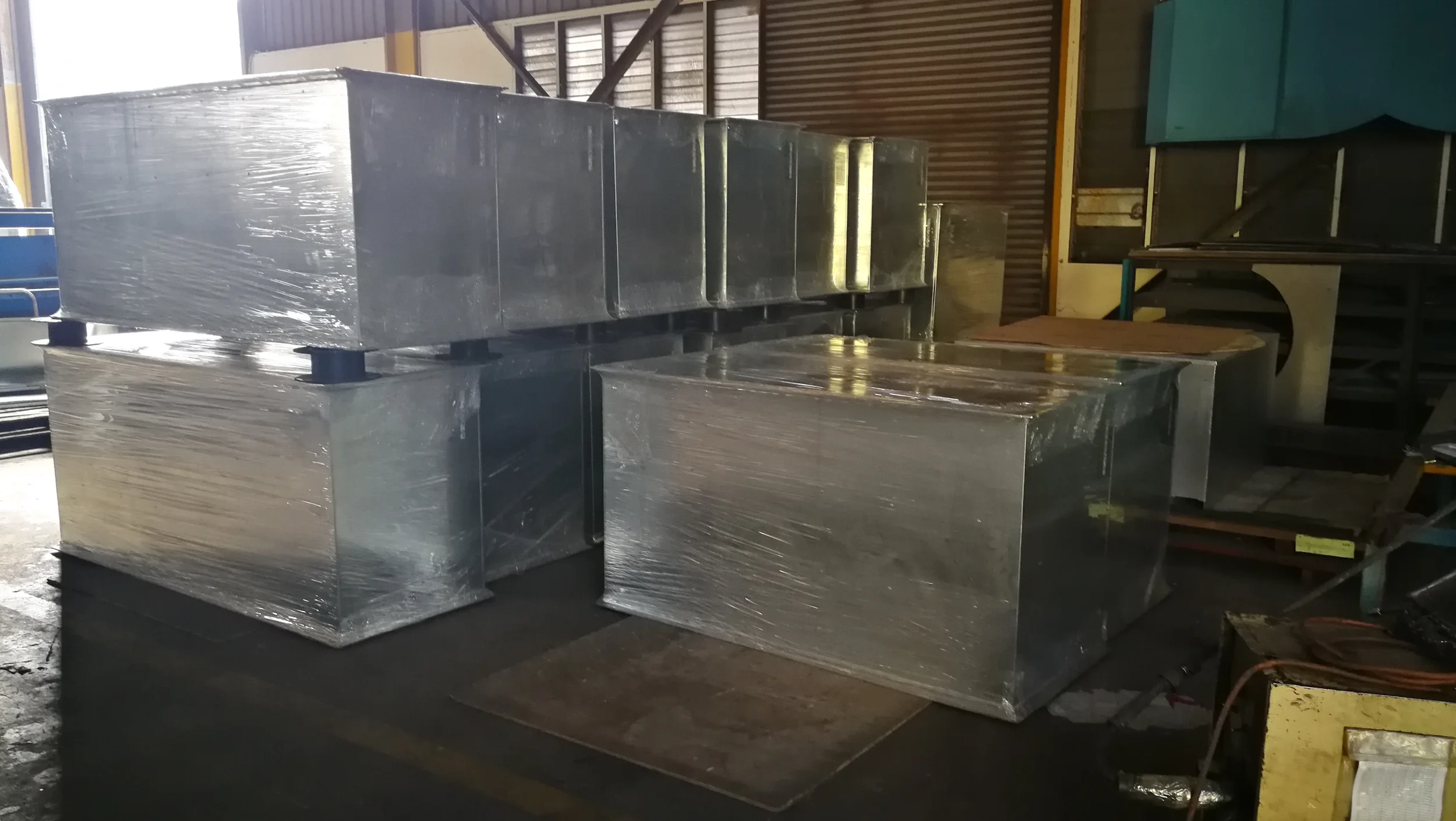
Completed duct silencer assemblies
Duct Attenuators Related Resources
-
Johan Setia LRT3 Silencers
Read the existing project reference.
Explore Johan Setia LRT3 Silencers -
Acoustic Test Lab
Explore acoustic testing capability.
Explore Acoustic Test Lab -
HVAC Silencers
Compare the related solution options.
Explore HVAC Silencers
Duct Attenuators FAQs
Is duct attenuator another name for a silencer?
Yes, it describes a silencer intended for a duct air path. The required construction still depends on the airflow, source spectrum and installation constraints.
Can splitters simply be packed closer together?
Reducing the passage area changes velocity and pressure loss. Acoustic benefit must be assessed together with airflow resistance and potential generated noise.
Where should the attenuator be placed?
Placement depends on the source, available space and the complete transmission path. Fan discharge conditions, bends and breakout paths should be reviewed before fixing the location.
Request a Quotation for Duct Attenuators in Malaysia
Send your duct attenuators requirements to Phoenix Noise Control to discuss the operating duty, installation and acoustic objective.