
EXHAUST & INLINE SILENCERS
Lower exhaust noise while protecting engine and process performance.
Exhaust silencers must be selected against source spectrum, exhaust flow, temperature, allowable back pressure, connection, drainage and structural support.
APPLICATION APPROACH
The product starts with the operating condition.
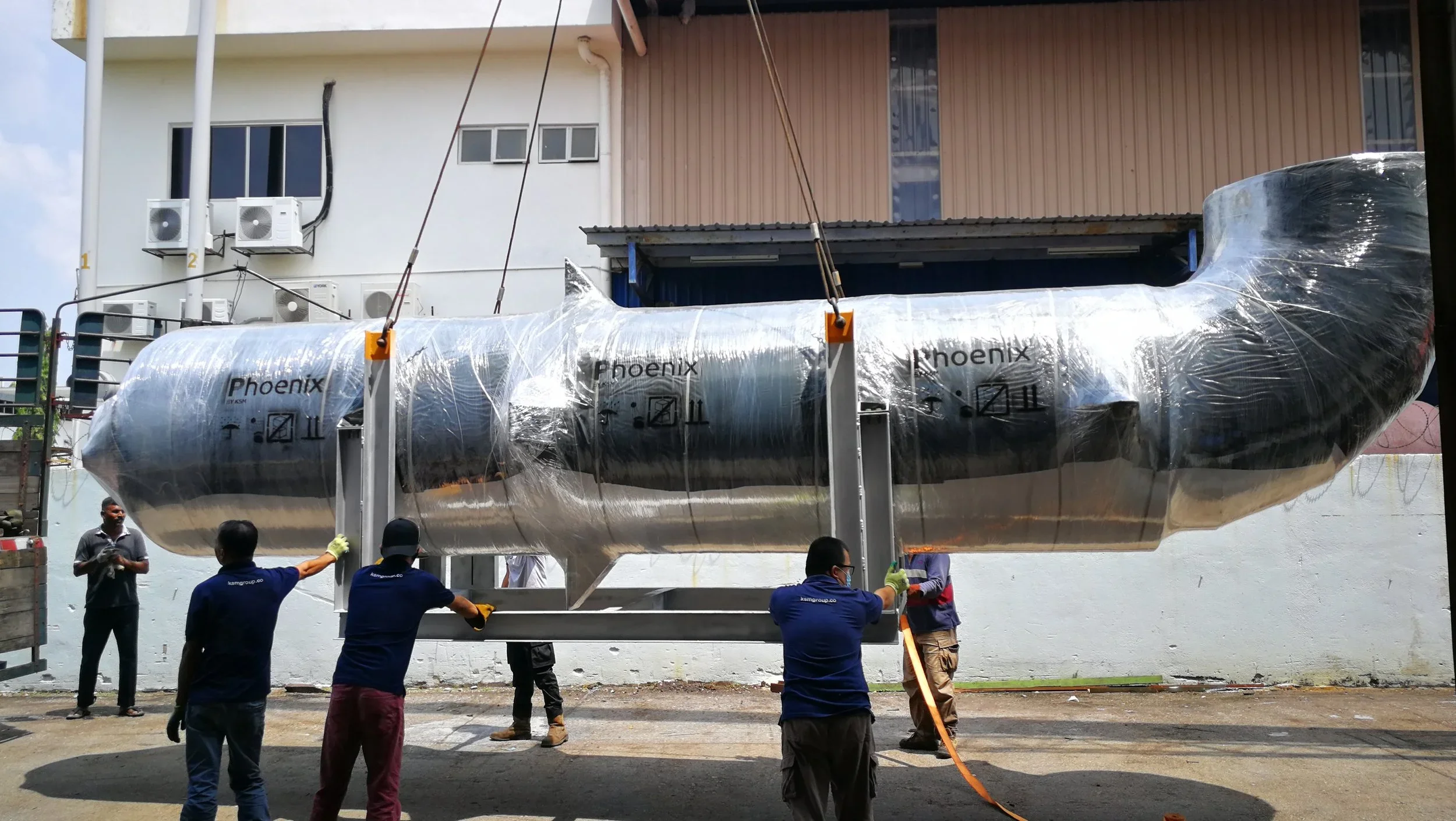
Phoenix supports rectangular, circular and project-specific exhaust silencer configurations. The design route depends on the equipment, required insertion loss, available footprint and exhaust-system constraints.
Important: Final performance and configuration depend on confirmed project data. The content here is a selection guide, not a technical proposal.
COMMON APPLICATIONS
Where this solution family fits.
Phoenix Noise Control supplies exhaust silencers for generators, engines, turbines, boilers, and industrial exhaust systems in Malaysia. Exhaust noise is one of the most common industrial noise issues because combustion equipment can produce high sound levels that travel through exhaust piping and discharge stacks.
An exhaust silencer must reduce sound while remaining compatible with the engine or process system. The design must consider exhaust gas flow, temperature, allowable back pressure, pipe size, orientation, support, expansion, weather exposure, and maintenance access.
01
Diesel generators
Standby, prime and critical-power applications.
02
Gas engines & turbines
High-temperature exhaust duties with strict resistance limits.
03
Boilers & industrial exhaust
Ducted exhaust, stacks and process systems.
DESIGN INPUTS
Information required for stronger selection.
An exhaust silencer creates resistance in the exhaust path. If resistance is too high, equipment performance can be affected. This is particularly important for generators and engines, where manufacturer back pressure limits should be respected.
Exhaust systems can operate at high temperatures. Material selection, expansion allowance, insulation, clearance, and safety considerations must be reviewed. Exhaust piping expands when heated, so supports, flexible connectors, and pipe routing should be coordinated.
01
Engine or source
Make, model, output and operating load.
04
Allowable back pressure
Confirmed by equipment or system designer.
02
Exhaust flow
At rated or design condition.
05
Connection
Diameter, flange, duct and orientation.
03
Temperature
Normal and maximum.
06
Noise requirement
Target level, insertion loss and receiver location.
PHOENIX DELIVERY MODEL
Review. Engineer. Fabricate. Coordinate.
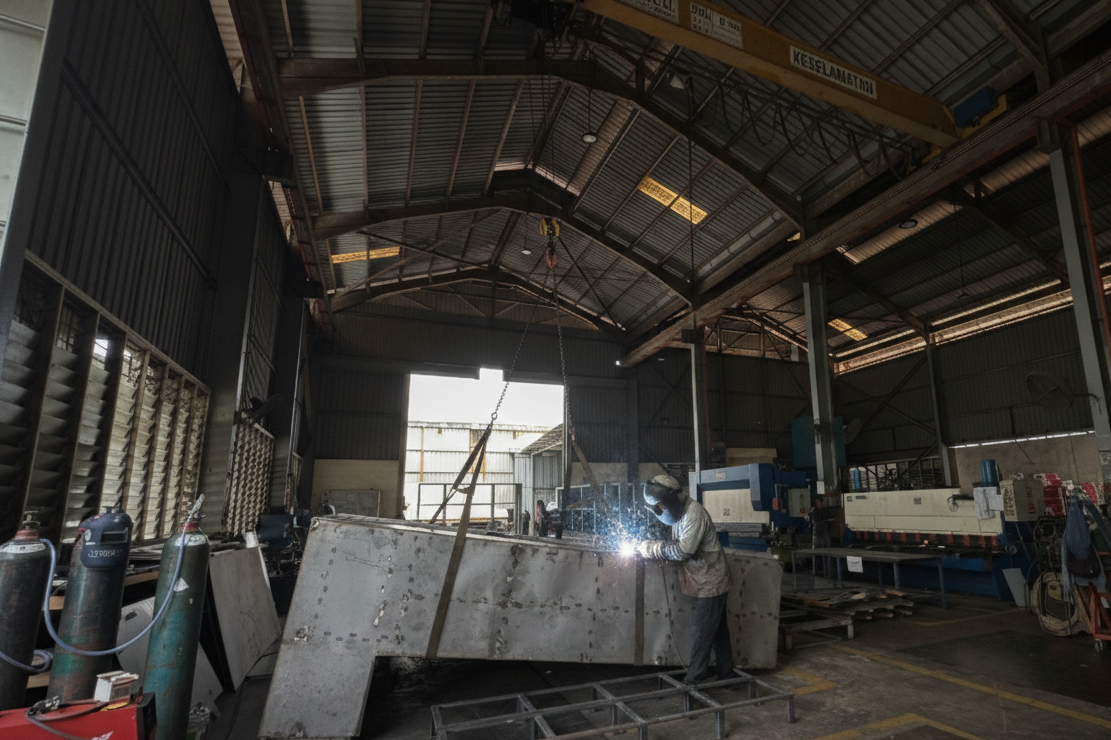
Product engineering is connected to practical fabrication and project requirements through Phoenix and VTR.
Exhaust Silencer FAQs
Can an exhaust silencer affect generator performance?
Yes. If the silencer creates excessive back pressure, generator or engine performance may be affected.
Can exhaust silencers be installed outdoors?
Yes. Outdoor silencers should be designed for weather exposure, corrosion protection, drainage, support, and safe access.
Is an exhaust silencer enough to reduce generator noise?
It controls exhaust noise, but generator body noise and ventilation noise may require an acoustic enclosure, acoustic louvres, or HVAC silencers.